
Lip Blush sleep
Sleeping After Lip Blush – How to Protect Your Lips While You Rest
Just had lip blush and wondering how you’re supposed to sleep without disturbing your freshly treated lips?
You’re not alone. One of the most common concerns following lip blush is whether sleeping on your side, touching your pillow or accidentally rubbing your lips during the night could affect the healing process.
The good news is that you don’t need to lose sleep worrying about your new lip blush.
With a little preparation and some simple precautions, you can make your first few nights more comfortable while your lips recover.
At Polished Recovery™, we’re here to help you understand what to expect, how to minimise unnecessary pressure and friction, and when you can return to your usual sleeping routine.
Can You Sleep Normally After Lip Blush?
Yes, you can sleep after lip blush, but it’s sensible to take extra care during the initial healing period.
Lip blush involves implanting pigment into the delicate skin of the lips. Immediately after treatment, your lips may feel swollen, tender, tight or sensitive.
During these early stages, try to avoid unnecessary rubbing, pressure and contact with bedding.
Sleeping on your back can help reduce the likelihood of pressing your lips against your pillow, particularly if you normally sleep on your stomach or with your face partially buried in the bedding.
However, back-sleeping isn’t a medical requirement for every lip blush client, and there’s no need to panic if you move during the night.
The aim is simply to keep your lips comfortable and avoid irritating freshly treated skin.
The First Night After Lip Blush
Your first night is often when your lips feel most sensitive.
You may notice:
- Mild to moderate swelling
- Tenderness or tightness
- A brighter or darker colour than expected
- Temporary dryness
- A small amount of clear fluid or pigment residue during the early healing period
These changes can be part of the normal initial response to treatment.
Before going to bed, gently cleanse your lips according to your technician’s aftercare instructions and pat them dry using a clean, disposable material.
At Polished Brows, we recommend regular gentle cleansing during the first day, followed by continued cleansing throughout the early healing period.
Do not apply Vitamin A&D ointment immediately after treatment. Under our aftercare protocol, a very thin layer is introduced only when natural flaking begins, often around days four to six.
Always follow the individual instructions provided by your treating technician.
What Is the Best Sleeping Position After Lip Blush?
Sleeping on Your Back
If comfortable for you, sleeping on your back is a practical option during the first few nights.
This position can help keep your lips away from your pillow and reduce accidental rubbing against bedding.
You may find it helpful to:
- Use a clean pillowcase
- Keep your bedding fresh
- Avoid pulling blankets over your mouth
- Position your head comfortably without putting pressure on your lips
- Follow any individual sleeping advice given by your technician
There is no need to force yourself into an uncomfortable position or sacrifice essential sleep.
Can You Sleep on Your Side After Lip Blush?
Side sleeping isn’t automatically prohibited after lip blush.
However, if you tend to press your mouth into the pillow, it may increase friction against sensitive lips.
If you naturally sleep on your side, try to position yourself so your lips aren’t resting directly against the bedding.
Avoid repeatedly adjusting or touching your lips with your hands during the night.
Can You Sleep on Your Stomach?
Stomach sleeping is less ideal during the early healing period because your face may be pressed into the pillow.
If possible, avoid positions that place direct pressure on your mouth while your lips are particularly tender or flaking.
Introducing Sleep Halo™ – A Little Extra Sleeping Comfort
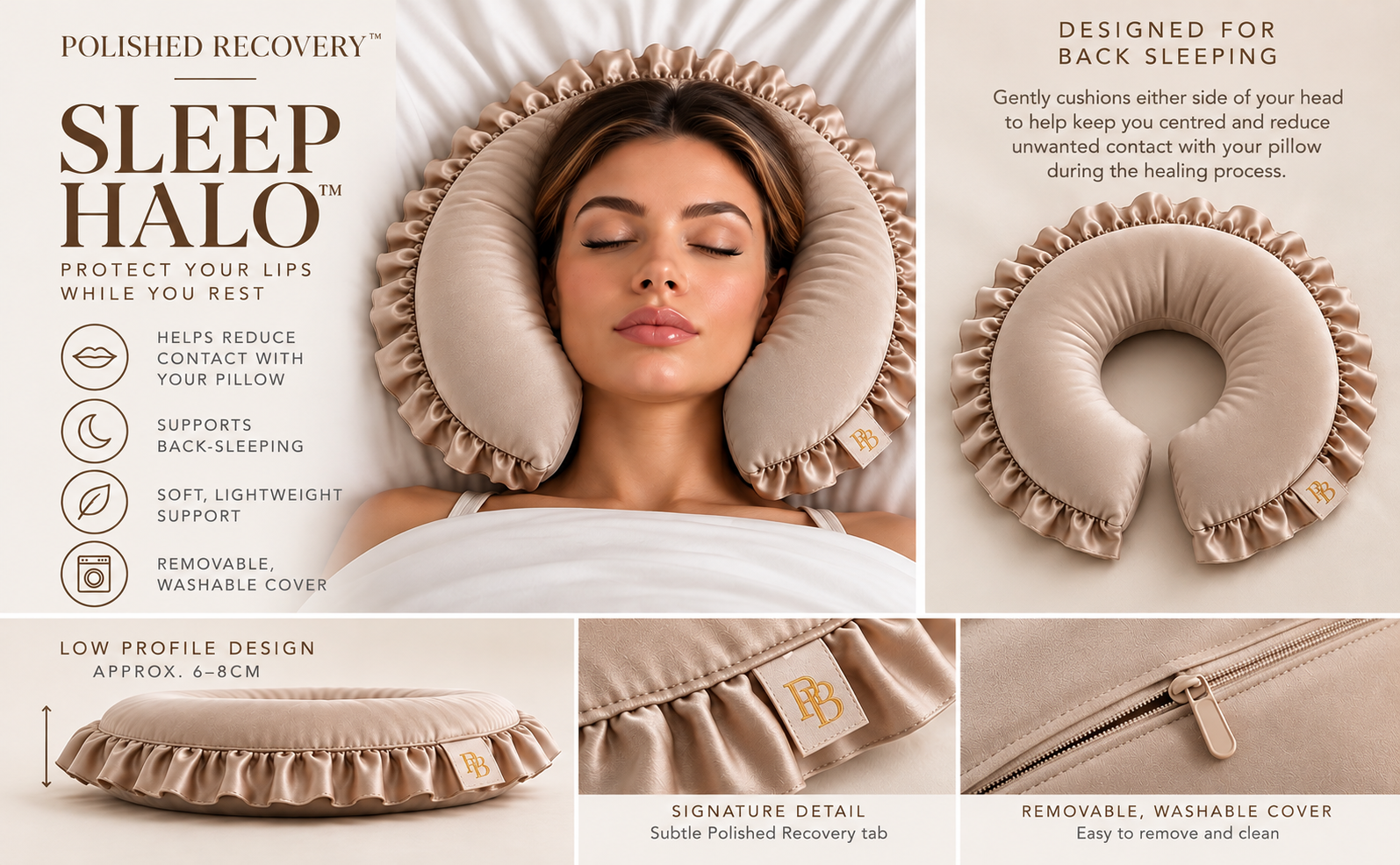
At Polished Recovery™, we understand that staying in one position throughout the night isn’t always easy.
That’s why we’re developing Sleep Halo™, a soft, specially shaped sleeping accessory inspired by the need to reduce unnecessary contact with sensitive areas during rest.
Its distinctive cushioned design offers an alternative to a conventional pillow arrangement for people looking for additional sleeping comfort.
Sleep Halo™ is being introduced as part of our growing range of beauty and recovery accessories, alongside our educational aftercare guides.
Why consider Sleep Halo™?
- An optional comfort accessory for your sleeping routine
- A soft, cushioned design
- A potential way to arrange your resting position more comfortably
- Designed to complement, rather than replace, your normal aftercare routine
Sleep Halo™ is not a medical device, and we don’t claim that it prevents pigment loss, speeds up healing or guarantees that you’ll remain on your back.
The final product and its suitability for different sleeping positions will be confirmed before launch.
How Long Should You Be Careful When Sleeping?
The first few nights are generally when your lips are most sensitive.
As healing progresses, you may notice natural dryness and flaking, often beginning around days four to six.
Visible flaking commonly settles around days six to eight, although everyone heals differently.
During this time, avoid rubbing or pulling away any peeling skin, including when washing your face or getting ready for bed.
Once the lips are comfortable and the surface has recovered, most people can gradually return to their usual sleeping habits.
Remember that although the surface may look healed, lip blush colour can continue to change over approximately four to six weeks.
Should You Put Ointment on Before Bed?
Not necessarily.
At Polished Brows, our protocol is to avoid applying Vitamin A&D ointment immediately after lip blush.
We recommend introducing a very thin layer only once the lips begin naturally flaking, rather than applying it from the first night.
Applying too much product can leave the lips excessively coated, so use only the amount recommended by your technician.
If you have been given different instructions by your own practitioner, follow their personalised aftercare guidance or contact them for clarification.
Keeping Your Pillow and Bedding Clean
Good hygiene is an important part of your recovery routine.
Before your first night:
- Change your pillowcase
- Keep pets away from your pillow and freshly treated lips
- Avoid sharing pillows or towels
- Wash your hands before carrying out aftercare
- Avoid sleeping with makeup or irritating skincare products around your mouth
You don’t need to create a sterile sleeping environment, but clean bedding and sensible hygiene precautions can help reduce unnecessary exposure to dirt and irritants.
What If I Accidentally Rub My Lips While Sleeping?
Try not to worry.
Accidentally touching your pillow or changing position during the night doesn’t automatically mean your lip blush has been damaged.
If you wake up and notice contact with your bedding, avoid scrubbing or over-cleansing your lips.
Simply continue with your recommended aftercare routine.
If you notice bleeding, significant irritation or an unexpected change in your symptoms, contact your technician for advice.
Frequently Asked Questions About Sleeping After Lip Blush
Can I sleep on my side the first night after lip blush?
You can, but try to avoid pressing your mouth directly into the pillow. Back-sleeping may be more comfortable if your lips are swollen or sensitive.
Do I need a special pillow after lip blush?
No. A specialist pillow isn’t essential for successful lip blush healing.
Some people prefer additional sleeping accessories for comfort, but they should be considered optional rather than a requirement.
Will sleeping on my side ruin my lip blush?
Not necessarily. Brief contact with bedding doesn’t automatically cause pigment loss. Repeated rubbing, picking or irritation should be avoided while the lips recover.
How many nights should I sleep on my back?
There isn’t a universal number of nights. If you find back-sleeping comfortable, it may be useful during the early healing period when your lips are most sensitive.
Can I use lip balm before going to sleep?
Follow your technician’s instructions. At Polished Brows, we introduce a thin layer of recommended Vitamin A&D ointment once natural flaking begins, rather than immediately after treatment.
Is swelling worse in the morning?
Some people notice temporary swelling or puffiness after resting. Mild swelling should generally improve rather than progressively worsen.
If swelling becomes severe, painful or continues increasing, seek medical advice.
When Should You Be Concerned?
Some tenderness, swelling and dryness are expected after lip blush, particularly during the first few days.
However, seek prompt medical advice if you experience:
- Increasing pain, redness or swelling
- Spreading warmth or redness around the lips
- Pus or unusual discharge
- Fever or feeling generally unwell
- Painful blisters, tingling or signs of a cold sore
Lip blush can trigger a cold sore outbreak in susceptible individuals. If you notice symptoms, speak to your GP or pharmacist promptly.
If you experience difficulty breathing or swelling affecting your tongue or throat, seek emergency medical assistance.
Explore More Lip Blush Recovery Advice
Sleeping is just one part of your lip blush recovery journey.
Explore our other Polished Recovery™ guides:
Lip Preparation – How to prepare your lips before your appointment, including hydration, cold sore precautions and what to avoid.
Lip Blush Aftercare – Your day-by-day cleansing routine, when to introduce moisturiser and how to care for your lips while they heal.
Lip Blush Healing – Understanding swelling, peeling, patchy colour, fading and why your lip blush may temporarily appear to disappear.
Lip Recovery – Return to our main hub for all your lip blush preparation, aftercare and healing information.
A Final Word From Polished Recovery™
Your first few nights after lip blush don’t need to be stressful.
Keep your bedding clean, avoid unnecessary pressure or friction, follow your technician’s aftercare instructions and give your lips time to recover.
Most importantly, don’t judge your final lip blush colour during the early healing stages.
Polished Recovery™
Permanent makeup aftercare, without the panic.