
Lip Blush Aftercare
Lip Blush Aftercare & Healing Guide
Just had lip blush? Understanding how to care for your freshly treated lips is an important part of the recovery process.
From swelling and tenderness to dryness, peeling and changes in colour, this guide explains what to expect during healing, how to care for your lips and when to seek professional advice.
LIP BLUSH AFTERCARE & HEALING GUIDE
Just had lip blush? Understanding how to care for your freshly treated lips is an important part of the recovery process.
From swelling and tenderness to dryness, peeling and changes in colour, this guide explains what to expect during healing, how to care for your lips and when to seek professional advice.
1. THE FIRST 24 HOURS AFTER LIP BLUSH
Immediately after treatment, your lips may appear brighter, darker and more defined than you expected.
Mild swelling, redness, tenderness and sensitivity are common during the initial stages of healing.
Cleansing Your Lips
During the first day, gently cleanse your lips approximately every 1–2 hours while awake, following your technician’s instructions.
Use clean cotton pads moistened with cooled boiled water and a small amount of gentle, suitably diluted baby shampoo, if recommended by your technician.
Gently wipe away any surface fluid or residue without scrubbing or applying pressure.
Pat your lips dry using a clean, disposable tissue.
Do Not Apply Moisturiser Yet
During this initial stage, we recommend keeping your lips clean and allowing the surface to settle.
Do not begin applying Vitamin A&D ointment until your lips start naturally flaking, unless your treating professional has advised otherwise.
2. DAYS 2–3: KEEPING YOUR LIPS CLEAN
Your lips may begin to feel tight, dry or slightly uncomfortable as the healing process progresses.
The colour may still appear noticeably stronger than your expected healed result.
How Often Should You Cleanse?
We recommend gently cleansing your lips approximately 4–5 times throughout the day, particularly:
- After eating.
- After drinking, where necessary.
- After brushing your teeth.
- Whenever food, toothpaste or other residue comes into contact with your lips.
Use your recommended gentle cleansing method and pat dry with a clean tissue.
Avoid excessive rubbing, soaking or repeatedly touching your lips.
Avoid Applying Ointment Too Early
At this stage, your lips may feel dry or tight, but this does not necessarily mean they are ready for moisturiser.
Wait until the skin begins naturally flaking before introducing Vitamin A&D ointment, following your technician’s guidance.
3. DAYS 4–6: FLAKING & PEELING
For many clients, visible flaking begins around days 4–6, although this can happen earlier or later.
You may notice small, dry flakes lifting from the surface of your lips.
This is a normal part of the healing process.
When to Start Vitamin A&D Ointment
Once your lips begin naturally flaking, you can start applying a very thin layer of the recommended Vitamin A&D aftercare ointment.
Always wash your hands before application.
Apply sparingly using a clean applicator, following your technician’s instructions.
The aim is to provide light moisturisation without leaving the lips heavily coated.
Never Pick or Peel Your Lips
Allow any dry skin to shed naturally.
Picking, pulling or rubbing the flakes can damage healing skin, increase the risk of infection and contribute to uneven pigment retention.
Continue gentle cleansing as required, particularly after eating and brushing your teeth.
4. DAYS 6–8: THE VISIBLE HEALING STAGE
For many clients, most visible flaking has finished by approximately days 6–8.
However, healing times vary, and some people may take longer.
Your lips may look significantly lighter once the flakes have shed.
You may also notice temporary unevenness or areas where the colour appears less visible.
Don’t Judge Your Final Colour Yet
Although your lips may look healed on the surface, the skin continues recovering beneath.
The colour can continue changing and settling over the following weeks.
Your final healed result is generally assessed around 4–6 weeks after treatment.
5. EATING, DRINKING & BRUSHING YOUR TEETH
During the initial healing period, take extra care to avoid unnecessary irritation.
Eating
Choose foods that are comfortable to eat and avoid very hot, spicy, acidic or salty foods if they cause stinging or irritation.
Avoid allowing food to remain on your lips.
Gently cleanse and pat dry after meals.
Drinking
Use a clean straw if recommended by your technician and if you find it helps minimise contact with your lips.
Allow hot drinks to cool before drinking.
Drink plenty of water to stay hydrated.
Brushing Your Teeth
Brush carefully to minimise toothpaste contact with your freshly treated lips.
After brushing, gently cleanse away any residue and pat your lips dry.
6. WHAT TO AVOID DURING LIP BLUSH HEALING
During the initial healing period, avoid:
- Picking, peeling or rubbing your lips.
- Lipstick, lip gloss and other cosmetic lip products until the surface has healed.
- Kissing or activities that cause friction against the treated area.
- Swimming pools, hot tubs, saunas and steam rooms.
- Excessive sweating and strenuous exercise during the early healing period.
- Sunbeds, tanning and prolonged direct sun exposure.
- Facial treatments, waxing and exfoliating products close to the lips.
- Sharing lip products or touching your lips with unwashed hands.
Avoid soaking your lips or directing shower water onto the treated area while the surface is healing.
If your lips become wet, gently pat them dry.
Follow your technician’s recommended restrictions, particularly while any flaking or broken skin remains.
7. SLEEPING AFTER LIP BLUSH
Your sleeping position is another consideration during the early stages of recovery.
Where comfortable, we recommend sleeping on your back to help minimise rubbing and pressure against your freshly treated lips.
Keep your pillowcase clean and avoid sleeping with your face pressed into your bedding.
Introducing Sleep Halo™ by Polished Recovery
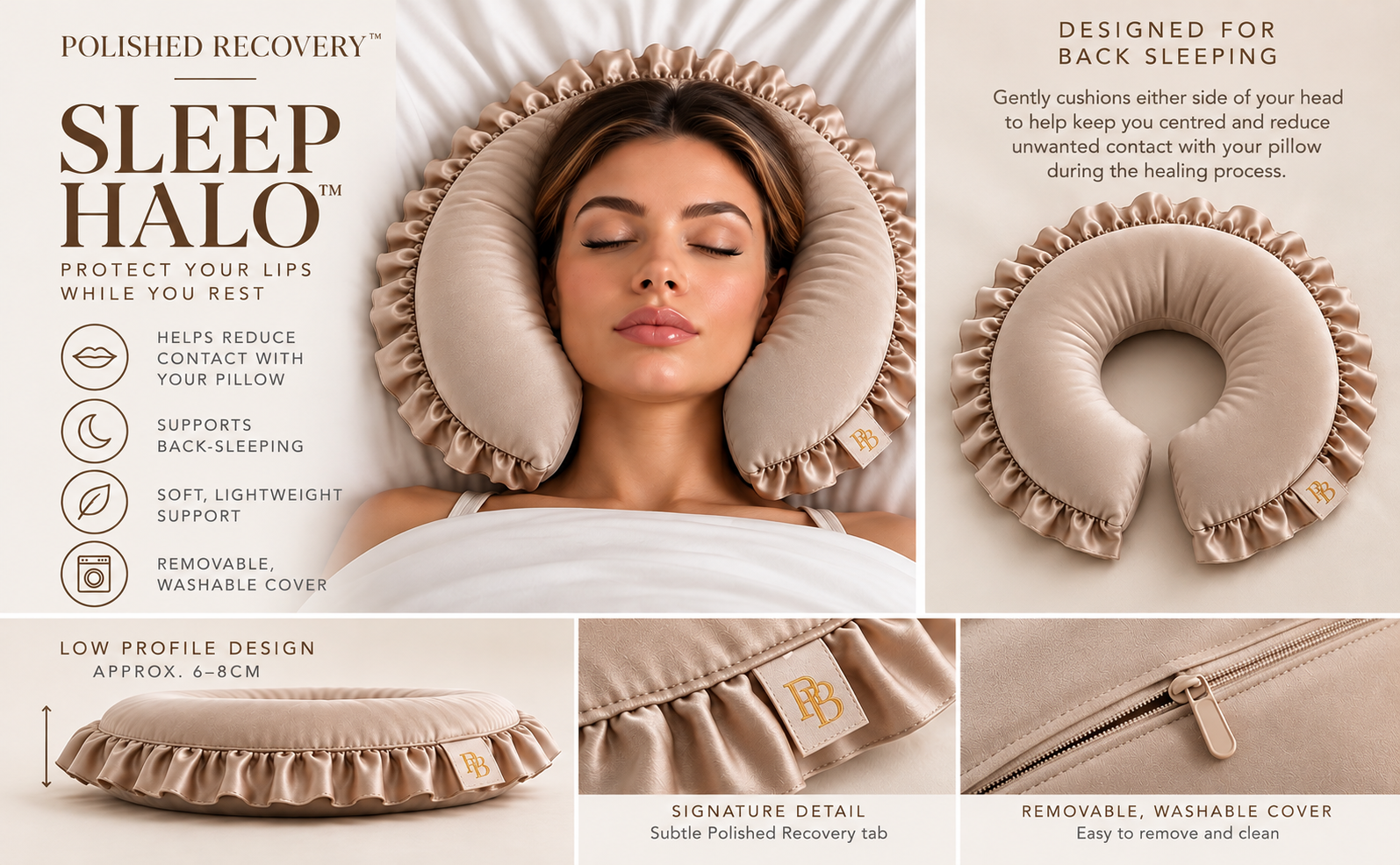
Our Sleep Halo™ concept is a soft, low-profile recovery cushion designed to provide gentle support around the head while resting on your back.
It may help make back sleeping more comfortable and reduce unwanted contact with bedding during recovery.
Sleep Halo™ is an optional comfort accessory and does not guarantee that you will remain on your back or prevent contact with your lips.
8. WHAT’S NORMAL & WHEN TO SEEK ADVICE
Common Healing Symptoms
During the first few days, you may experience:
- Mild swelling and tenderness.
- Temporary redness or sensitivity.
- Tightness and dryness.
- Light flaking or peeling.
- Changes in colour intensity.
- Temporary unevenness as the pigment settles.
These symptoms should generally improve as healing progresses.
When to Contact Your Technician or Seek Medical Advice
Increasing pain, worsening swelling, spreading redness, warmth, pus or feeling feverish may indicate infection and require prompt medical assessment.
If you develop clusters of painful blisters, tingling or symptoms suggesting a cold sore outbreak, seek prompt medical advice, as antiviral treatment may be time-sensitive.
Seek urgent medical help for rapidly worsening swelling, severe symptoms or signs of an allergic reaction. Call 999 if you experience difficulty breathing or swelling of the tongue or throat.
Do not assume that worsening symptoms are simply part of normal healing.
9. WHEN WILL MY LIP BLUSH COLOUR SETTLE?
Lip blush colour changes throughout recovery.
Immediately after treatment, the colour is usually stronger and more vibrant.
As the surface begins to heal and flake, the colour may appear lighter or uneven.
Over the following weeks, the pigment continues to settle.
Most clients can assess their healed colour after approximately 4–6 weeks.
A follow-up appointment may be recommended around 6–12 weeks after the initial treatment, depending on your technician’s protocol and your individual results.
10. LONG-TERM LIP BLUSH CARE
Once your lips have fully healed, continue looking after them to help maintain their appearance.
Keep your lips moisturised and use a suitable SPF lip product to help protect against sun exposure.
Avoid aggressive exfoliation and inform relevant practitioners about your permanent makeup before laser or advanced skin treatments around the mouth.
Lip blush gradually fades over time, and colour retention varies between individuals.
YOUR LIP BLUSH RECOVERY JOURNEY
Lip blush healing is a process, and the appearance of your lips will change during the first few days and weeks.
The most important things to remember are to keep your lips clean, avoid picking or peeling, introduce your recommended moisturiser at the appropriate stage and allow the colour time to settle.
Always prioritise the aftercare instructions provided by your treating professional, as techniques and individual requirements can vary.
Polished Recovery™ — Permanent makeup aftercare, without the panic.
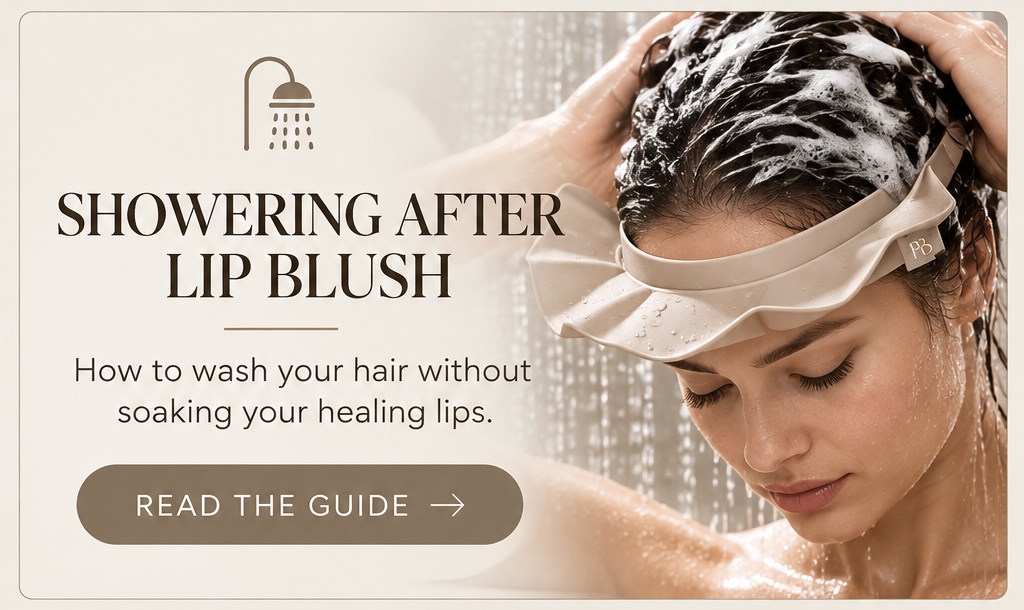
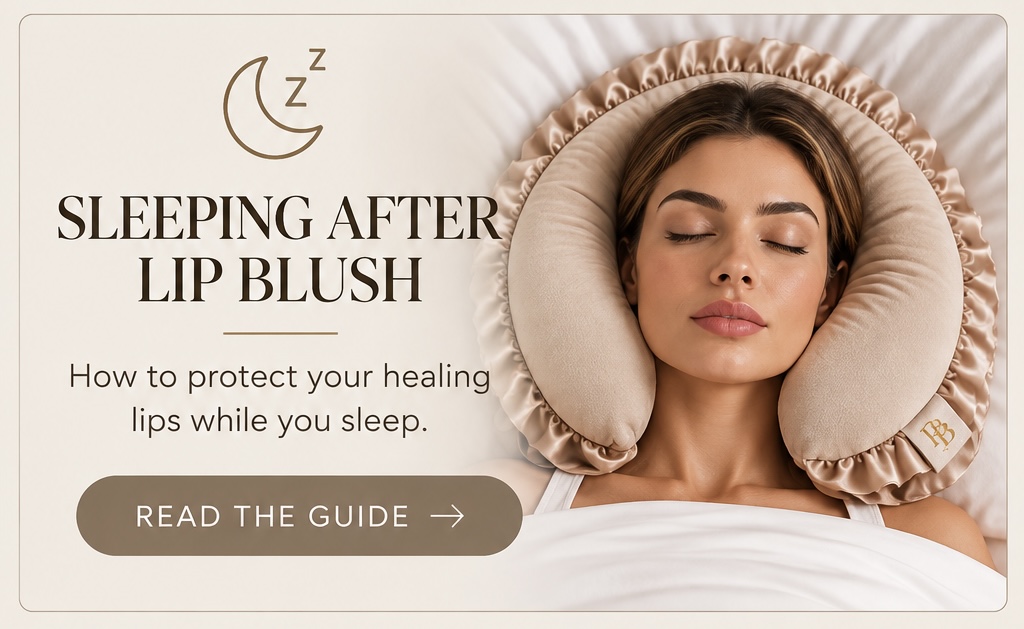
Read our full guide to showering after lip blush →